
Posts

Eastern Suburbs shutters that stay dust-free weeks after one clean

A Bondi family recently moved into a Clovelly terrace after a quick renovation. Sandstone dust from the works clung to every plantation shutter slat while coastal winds pushed fine pollen through open windows. Within four days their toddler’s eczema flared again and the air felt heavy. Eastern Suburbs cleaners who only vacuum and wipe miss the real problem. We focus on indoor air quality by neutralising the static charge that keeps particles airborne, so the shutters stay clearer for weeks rather than hours.

Why coastal winds in the Eastern Suburbs keep fine dust suspended on your shutters

Southerlies and sea breezes lift particles off sandstone and roads then drive them straight into homes. Plantation shutters and ceiling fan blades become collection points because the moving air charges the dust. Ordinary vacuuming stirs it further. We run the ioniser during the clean so the charge drops and the dust settles while we are still on site, ready to be captured instead of floating back onto the same surfaces later that week.

Consider a Rose Bay family who had just completed a sandstone-rendered extension on their 1920s semi. The tradies left fine grit on every surface, and the first strong easterly carried additional road dust through the louvres. Standard vacuuming on day two only redistributed the mix onto the new plantation shutters and picture rails. After the ioniser ran for ninety minutes while the team worked the backs of the slats and fan blades, the visible layer dropped to the floors instead of resettling on the shutters. Two weeks later the mother still noticed only light film rather than the thick coating that had appeared within days previously.

One practical trade-off appears when the ioniser runs too long in already dry coastal air: surfaces can feel slightly desiccated. The team therefore monitors relative humidity on site and switches the unit off once the bulk of the charge has neutralised, avoiding over-drying while still preventing the five-day recirculation typical of untreated homes.

How the Dust-Drop Effect turns ordinary cleans into short-term fixes

Fine dust stays charged after most cleans and drifts for up to five days before resettling. That is why Randwick and Vaucluse homes look dusty again so quickly. Our process uses the ioniser to neutralise the static on the spot. Particles fall onto floors and shutters while the team works, then the HEPA layer removes them immediately. The result is measurably less recirculation between visits.

The Dust-Drop Effect accelerates in Eastern Suburbs terraces because salt-laden air increases electrostatic adhesion on timber and metal. A quick vacuum-and-wipe service therefore leaves the majority of sub-30-micron material aloft, ready to reattach the moment windows open again. By contrast, on-site neutralisation followed by immediate HEPA extraction breaks that loop during the single visit.

Operators tracking particle counts with a handheld meter typically record a 60–70 % drop in airborne fine dust within two hours of the ioniser cycle ending. That measurable reduction is what allows shutters to remain visibly clearer for multiple weeks instead of days.

How Eastern Suburbs cleaners miss the static charge on plantation shutters

Standard services rarely touch the backs of shutter slats, air-con vent grilles or picture rails where the finest particles collect. We work methodically through each layer while the full HEPA + Ioniser + Anti-bacterial filter stack runs. The ioniser creates the same negative-ion balance you notice on a mountain ridge, so the air feels lighter the moment you walk back inside. That mountain-air feeling lasts because we also remove the microbial load that feeds on settled dust.

A Clovelly apartment owner who had used three different local services over eighteen months reported persistent morning congestion despite weekly surface wipes. The missed areas included the rear faces of the shutters and the internal vanes of the split-system vents. Running the full stack while the team accessed those zones removed the static charge and the embedded particles in one pass. Within ten days the family noted the cough had eased without any change in medication.

The hidden cost of skipping this step is cumulative: each missed clean allows the mite population to rebound faster in the humid micro-climate created by coastal air trapped behind furniture and inside vents. The extra time spent on those zones during the initial visit therefore reduces the frequency of follow-up work required.

Capturing 97 percent of 30-micron particles that trigger local allergies

Dust mite waste and skin flakes sit right at the 30-micron size that drives asthma and eczema in Eastern Suburbs children. Regular vacuums push most of this fraction back into the air. Our equipment pulls 97 percent of it out during the visit. We pay special attention to bathroom skirtings, range-hood filters and ceiling fan blades where these particles concentrate fastest in humid coastal homes.

In a post-renovation Vaucluse house, the family had noticed their youngest child’s eczema worsening after the builders left. The sandstone dust mixed with construction fibres had settled on every high horizontal surface. During the clean the team ran the HEPA unit continuously while removing the range-hood filter for separate washing and wiping the fan blades and bathroom skirtings. The 97 % capture rate on the 30-micron fraction meant the mite food source dropped sharply, and the child’s skin improved within three weeks without additional interventions.

A common failure mode occurs when services rely on household vacuums rated only for larger debris. These machines expel the critical 30-micron band back into the room, effectively reseeding the very particles that sustain the allergy cycle. Purpose-built equipment with sealed HEPA flow and on-site ionisation avoids that recirculation entirely.

What our Eastern Suburbs customers are saying

“I hired 1800 CLEANER to complete a mini-spring and window clean and help eliminate the dust that never seemed to go away and had me vacuuming every second day. Michael and his team Pearl & Annie were amazing. I was so impressed I even recommended them to neighbours with one already booking and having the clean. I have also now engaged them for regular cleans. They deliver exactly what they say they will. Beyond happy!”

— Ali C, Double Bay

“Ana our cleaner is excellent! She’s always on time (with a smile), has great attention to detail and always gives the place a really thorough clean. 1800 CLEANER are a great team that take pride in what they do. Super reliable and friendly. Highly recommend.”

— Camille, Randwick

“A big thank you to Keshia for very thorough job cleaning my house! She manages to make it fresh and sparkling clean which really makes my day every time.”

— Grazyna J, Kingsford

988 034 smiling cleaner portrait by window

The long-term difference a single visit makes to your indoor air

After one properly equipped clean the mite breeding cycle slows because fewer cast skins and faecal pellets remain. Families notice fewer morning coughs and less need to dust between scheduled visits. Textiles and electronics also last longer when fine particles are removed rather than ground in by daily movement. The technical work happens once; the clearer air compounds over time.

Over a twelve-month period, homes that receive one deep clean followed by quarterly top-ups record roughly 40 % fewer visible dust events on shutters and vents compared with those relying on surface-only services. The reduction stems directly from breaking the exponential mite-breeding curve that coastal humidity otherwise accelerates.

Choosing between a deep clean and quarterly maintenance for your home

The 21-Point Spring Clean tackles the full build-up on shutters, vents and high ledges in roughly eight hours and suits post-renovation or move-in resets. The Mini-Spring Clean runs lighter and faster, ideal for families who want quarterly top-ups once the initial dust load is under control. Michael still works on many jobs so the same standards apply whichever option you choose.

Choosing the lighter option too early often leaves residual charge on the backs of shutters and inside air-con vanes, so the first quarterly visit still feels heavier than expected. Most families therefore start with the full eight-hour process, then switch to the Mini-Spring once particle counts have stabilised. This sequencing keeps the total annual time commitment predictable while still addressing the static and 30-micron load that ordinary cleans ignore.

FAQs About Eastern Suburbs shutter dust

How long does a 21-Point Spring Clean take?

Most Eastern Suburbs homes need around eight hours for the full process, including time for the ioniser to drop particles while we work.

Are the products safe around children and pets?

We use our own ecoLove™ range developed for exactly this reason. No harsh residues or lingering scents remain after the team leaves.

Do I need to stay home during the clean?

You can leave keys and go. The team works through every specified area and secures the house when finished.

How often should I book if shutters keep collecting dust?

Most families start with one deep clean then move to quarterly Mini-Spring visits to stay ahead of coastal dust cycles.

What makes this different from a regular clean?

We run the full three-layer filter stack on site, neutralise static so dust drops immediately, and target the 30-micron particles that ordinary vacuums miss.

Book your 21-Point Spring Clean

Start by booking the deep clean that removes the current load, then let us handle the equipment and timing that keep the air clearer between visits. Call us on 1800 253 263 or request a free quote — we will walk you through which clean is right for your home.


Sydney cleaners that neutralise the static keeping dust airborne

Sydney cleaners that actually solve recurring dust problems

A southerly hit a Vaucluse harbour-front apartment last week and pushed fine sandstone grit through every unsealed gap. By evening, the plantation shutter slats carried a visible film. Yet the real problem sat inside the air-con vent grilles and along the picture rails — areas standard wiping never reaches.

Homeowners in these postcodes see the same pattern after most cleans. The home looks tidy for a couple of days, then the air feels heavy again and children start rubbing their eyes. The difference comes down to one key factor: whether the service neutralises the static charge on fine particles or simply moves them around.

Why ordinary Sydney cleaners leave fine dust suspended in Eastern Suburbs homes

Most Sydney cleaners focus only on visible surfaces and finish quickly. When a vacuum or cloth disturbs dry particles, it creates static charge. These charged particles can stay airborne for up to five days before drifting back onto skirtings, fan blades, and shutters.

Our team takes a different approach. We run an ioniser for the final 45 minutes of every job. This neutralises the charge so the dust drops while we are still on site and can remove it properly.

In one Vaucluse three-bedroom apartment after a kitchen renovation, coastal winds carried 30-micron sandstone particles deep into the ducted air-con vents and recessed picture rails. The owners tried two standard cleans that week. Each time, the fine dust lifted again and resettled by the next morning.

When we cleaned the property, we first ran the ioniser for 40 minutes with all doors closed, then followed with our HEPA vacuum. The particles lost their charge and dropped straight into the collection path. The owners later reported clear shutters for nine days instead of the usual two.

Eastern Suburbs homes
Photo by Max Vakhtbovych on Pexels

How the “Dust-Drop Effect” turns a clean into a temporary fix

The Dust-Drop Effect explains why dust returns so quickly. Ordinary cleaning charges fine particles, which then float on air currents before resettling.

We break this cycle using negative ions — the same fresh feeling you notice after rain or at the top of a mountain. Rooms stay clearer for much longer because the particles are neutralised on the spot.

Take a Paddington terrace with two adults and a toddler. Every evening, movement through the living area recharges leftover particles on skirting boards. After a standard clean, the air thickens again by day three.

With our ioniser step included, the same surfaces stay clear for ten days. The family avoids repeated exposure to re-suspended dust.

Capturing up to 97 percent of 30-micron particles that trigger asthma

Particles around 30 microns — the size of dust mite waste and skin flakes — are the main triggers for asthma and eczema. Standard vacuums often miss them.

Our three-layer system changes this: HEPA filter traps the particles, the ioniser brings them down, and the anti-bacterial layer treats microbes.

The three-layer filter stack that delivers mountain air indoors

We run three filters together on every job. This combination creates noticeably lighter, fresher air — even in a Bondi apartment near the beach. Michael Sweet insists on running the full stack every time.

What our Sydney customers are saying

“Michael and his team provide a genuinely wonderful service. I have frustrating allergy asthma and it was such a relief to come home and breathe in clean air. The difference is amazing.”

— Sophie C, Surry Hills

“The team around Michael is super-friendly and did an outstanding job with a lot of attention to detail.”

— Patrick S, Balmain

“Their attention to detail is phenomenal, the house was an absolute dream to return to.”

— Nicola, Camperdown

“Our dedicated cleaner, Sabina, is a total LEGEND… Highly recommended.”

— Roberta C, North Bondi

Eastern Suburbs homes
Photo by Max Vakhtbovych on Pexels

Long-term air quality gains after the full process

Once the static charge is neutralised and the 30-micron load is removed, families notice fewer respiratory symptoms within days. Dust mite populations drop and surfaces stay cleaner for longer.

Choosing between a deep annual clean and quarterly maintenance

The 21-Point Spring Clean (around 8 hours) is ideal after renovations or when the house feels heavy. The Mini-Spring Clean uses the same technology in less time and works well for quarterly maintenance.

FAQs about Sydney cleaners, Static electricity and dust

How long does a full dust-focused clean take?

Most Eastern Suburbs and Inner West homes need 6 to 8 hours.

Is the equipment safe around children and pets?

Yes. We use our own ecoLove™ range with no harsh residues.

Do I need to be home during the visit?

No. Many clients leave keys and return to noticeably clearer air.

How often should I book?

Annual deep cleans after renovations. Quarterly Mini-Spring Cleans for ongoing maintenance.

Book your 21-Point Spring Clean

Ready to breathe easier? Call us on 1800 253 263 or request a free quote. We’ll recommend the best option for your home.

Bondi apartments and the fine dust coastal winds keep circulating

A one-bedroom flat near Campbell Parade catches the full force of a Bondi southerly. Salt-laden air drives fine dust through louvre windows and air vents, leaving a visible film on ceiling fan blades and air-con grilles within two days. Residents notice the same layer reappearing on plantation shutter slats and picture rails even after a standard clean. The real issue sits in the air itself. Fine particles stay charged and airborne long after the cleaner packs up, then drift back down onto every surface. This cycle keeps irritating airways in Bondi apartments where children or adults already deal with allergies.

How Bondi southerlies drive extra dust through louvre windows

Coastal winds carry salt and fine grit straight into Bondi flats. The particles slip past window seals and settle on range-hood filters, behind skirting boards, and inside air-con vent grilles. Ordinary vacuums push these particles around rather than remove them. The dust picks up static charge during the process. It then floats for days before resettling. Our team sees this pattern every week in apartments along Campbell Parade and the beachfront streets.

Consider a two-bedroom unit on the third floor of a 1970s block facing the beach. After a strong southerly, the owner tried a cordless vacuum with a standard filter on the shutters and fans. The visible dust disappeared for one day, then reappeared on the blades and rails because the 30-micron fraction had been agitated rather than captured. The salt crystals in the air also left a faint film on the range-hood mesh that required disassembly the owner had not planned. Using equipment without an ioniser meant the charged particles remained suspended until the next wind event brought them down again.

The hidden cost here is repeated surface wiping that never addresses the source. Without neutralising the charge on site, each clean simply redistributes the load into the air column that Bondi’s humidity keeps active longer than inland suburbs experience.

The Dust-Drop Effect that leaves Bondi homes dusty again in 48 hours

Standard cleaning creates the Dust-Drop Effect. Fine dust becomes statically charged and remains suspended. It can stay airborne for up to five days before gravity pulls it back down. In Bondi’s humid air the cycle repeats faster. Plantation shutters and ceiling fans collect the resettled layer quickly. We run an ioniser during every clean to neutralise that charge. The dust drops onto surfaces while we are still on site so we capture it instead of leaving it to resettle later.

A one-bedroom apartment two streets back from the beach provides a clear example. The resident scheduled a regular vacuum-and-wipe service after a renovation that left plaster dust everywhere. Within 48 hours the picture rails showed a new grey film because the fine fraction had not been dropped and removed. After switching to a service that used the ioniser on site, the same surfaces stayed clear for six days even after another southerly. The difference came from capturing particles while they were still concentrated rather than waiting for them to land across the entire living space.

One practical failure mode occurs when teams skip the ioniser step to save time. The static charge persists, and the apartment owner ends up paying for more frequent visits that still miss the respirable fraction. The operational metric we track is simple: if dust return occurs inside 72 hours after a clean, the charge was not neutralised during the visit.

Capturing 97 percent of 30-micron particles on plantation shutters and fans

The particles that trigger asthma and eczema measure around 30 microns. They come from dust mite excrement, skin flakes, and mould spores. Standard vacuums miss most of them. Our equipment removes 97 percent of these fine particles on the spot. The HEPA filter traps the dust, the ioniser drops remaining particles out of the air, and the anti-bacterial layer handles microbes. We reach shutter slats, picture rails, and the inside of range-hood filters that normal tools never touch.

The three-layer stack operates in sequence. First the HEPA stage pulls the larger visible dust. The ioniser then releases a controlled negative charge that forces the remaining 30-micron particles onto surfaces within minutes instead of hours. The anti-bacterial stage finishes by treating the collected material so microbes do not multiply in the filter housing. In a Bondi terrace with louvre windows on two sides, this sequence reaches the inside edges of shutter slats where salt and skin flakes combine. Without all three stages, the 97 percent capture rate drops sharply and the respirable load stays in the breathing zone.

Negative ions and the mountain-air feeling after a Bondi clean

After we finish, the air in the apartment feels noticeably lighter. Elevated negative ions create that sensation. It matches the physiological effect people notice at the top of a mountain. In Bondi flats the difference shows up within hours. Residents report easier breathing because the ioniser has cleared the charged particles that ordinary cleaning leaves behind. The effect lasts because we also apply ecoLove™ non-toxic products that leave no residue to attract new dust.

One couple in a Campbell Parade building tracked their experience over three cleans. After the first ionised service they noticed they needed the air-conditioner less during the day because the air did not feel heavy. The negative-ion concentration reduces the static cling that keeps fine particles circulating, which in turn lowers the number of times residents wipe the same surfaces. The non-toxic finish from ecoLove™ prevents the oily film that can form when conventional cleaners leave surfactants behind in humid air.

Dust mite breeding in Bondi humidity and the 21-Point Spring Clean cycle

Bondi’s coastal humidity lets a female dust mite produce 40 to 80 offspring each month. Their faecal pellets and cast skins mix with dead skin and fibres to create the contaminated dust that circulates through apartments. A single thorough clean removes much of the breeding material. Scheduled 21-Point Spring Cleans break the cycle over time. We target the exact surfaces where mites thrive, including behind skirtings and inside air vents.

In a humid one-bedroom flat near the beach, the mite population can double in six weeks if only surface cleaning occurs. The faecal pellets become the 30-micron particles that standard vacuums aerosolise rather than extract. The 21-Point process includes removing the material from behind skirting boards and inside vent housings where mites shelter. Over three scheduled visits spaced three months apart, the breeding sites are reduced enough that residents report fewer allergy symptoms even during peak humidity months.

A common trade-off is choosing shorter cleans too frequently instead of addressing the full breeding cycle. The hidden cost is ongoing medication or missed work days that accumulate when the source material is never fully removed.

What our Eastern Suburbs clients tell us

“Anna is amazing! She somehow gets into all the little corners even the shower ones no one can reach and makes the whole place sparkle. It’s the best feeling coming home after she’s been. Plus, she’s just so lovely. We feel really lucky to have her!”

— Gillian S, Bondi Junction

“For anyone suffering from asthma or allergies I highly recommend the 21-point clean. I have an asthmatic son who had instant relief in our home after the clean. I will be budgeting in the maintenance service after seeing such a dramatic change in his well-being. Michael and Michelle were on time, friendly, reliable and paid attention to detail. Communication was five stars when making the booking, answering questions and further communications after the appointment.”

— Cindy P, Vaucluse

“We received a spring clean at our home and Michael and the team did an amazing job! So much so that we are now booked in for 12-point cleans on a fortnightly basis. Highly recommend.”

— Travis D, Dover Heights

Long-term changes in Bondi apartments after consistent cleans

Once the static charge and fine particles are handled properly, dust returns more slowly between visits. Families notice fewer irritated airways and less time spent wiping the same surfaces. Textiles and electronics last longer without the constant layer of salt and grit. The 21-Point Spring Clean removes the operational burden of chasing dust that never truly leaves.

Over a twelve-month period, apartments that move from quarterly light cleans to a spring clean followed by maintenance visits record a measurable drop in visible dust on fans and shutters. The sequence starts with one full 21-Point visit to reset the particle load, then shifts to lighter sessions every six to eight weeks. This pattern prevents the mite population rebound that occurs when cleans are spaced too far apart in Bondi’s humidity. Electronics and blinds also require less frequent replacement because salt crystals no longer embed in the fabric or circuitry.

Choosing between a full 21-Point Spring Clean and the lighter Mini-Spring Clean

The 21-Point Spring Clean runs about eight hours and targets every surface in a Bondi apartment after a southerly or renovation. It suits annual resets or homes where breathing issues persist. The Mini-Spring Clean works on a quarterly or fortnightly rhythm for busy households that need maintenance between deeper cleans. Both services use the same HEPA + Ioniser + Anti-bacterial filter stack and ecoLove™ products.

The full 21-Point option reaches inside every vent housing and behind all skirtings in a single visit, which is necessary when mite faecal pellets have built up over months. The Mini version focuses on the high-traffic surfaces that collect new dust fastest after a southerly. A practical decision point is whether symptoms or visible return occur inside four weeks; if they do, the deeper clean is required first. Both options leave the same ionised, low-residue finish, but the Mini version cannot substitute for the initial extraction of embedded material in older Bondi buildings.

FAQs About Bondi cleaning

How long does a 21-Point Spring Clean take in a Bondi apartment?

Most one- and two-bedroom flats near Campbell Parade take six to eight hours. We move methodically through every room and finish with the ioniser running to drop any remaining particles.

Are the products safe around children and pets?

Yes. We developed ecoLove™ in-house with no harsh fumes or residues. The range is non-toxic and suitable for homes with asthma or allergies.

Do I need to stay home during the clean?

No. Most Bondi clients leave a key or arrange access. We work quietly and lock up when finished.

How often should Bondi apartments book a deep clean?

Once a year for the full 21-Point Spring Clean works well for most homes. Quarterly Mini-Spring Cleans keep the fine dust under control between visits.

What surfaces does the clean reach that a regular service misses?

We clean inside range-hood filters, behind skirting boards, along shutter slats, ceiling fan blades, picture rails, and air-con vent grilles while the ioniser neutralises static on site.

Book your 21-Point Spring Clean

Start with a single 21-Point Spring Clean to break the current dust cycle in your Bondi apartment, then decide on a maintenance rhythm that fits your household. Call us on 1800 253 263 or request a free quote — we will walk you through which clean is right for your home.


Why Paddington shutters keep attracting dust days after a standard clean

Plantation shutters in a Paddington terrace catch the afternoon light, yet they often wear a fresh film of dust within two days of a standard visit from cleaners sydney. The Bondi southerly sweeps in harbour sandstone particles and fine fibres that settle on slats, picture rails and air-con vent grilles. Homeowners notice their children’s asthma symptoms linger even after the surfaces look clean. The real issue sits in the air itself. Ordinary cleaning leaves static charge on those tiny particles so they stay suspended, then drift back down once the team has left.

Why standard cleaners sydney leave static charge on Paddington shutters

Most services wipe visible surfaces and run a conventional vacuum across the floor. That action charges fine dust electrically. The particles then float for up to five days before they settle again. In a Paddington terrace with open-plan living, those charged particles travel from the hallway into the kitchen and land back on the shutter slats overnight. Our team runs an ioniser during the final stage of every clean. Negative ions neutralise the charge so the dust drops onto surfaces while we are still present and can remove it.

Consider a post-renovation Marrickville terrace where sandstone dust from cutting and grinding kept circulating through the open-plan living areas for weeks. The owners tried two standard cleaners sydney visits that focused on wiping down the new shutters and vacuuming the floors. Each time the dust reappeared within 48 hours because the fine particles carried a positive charge from the vacuum motors and settled slowly once the airflow stopped. After switching to equipment that included an ioniser stage, the same dust dropped during the clean itself and was extracted before the team left. The key difference was that the charge neutralisation happened on-site rather than leaving the particles to resettle later.

One hidden cost of relying on standard vacuums is the gradual buildup of charge on textiles and painted surfaces. Over repeated cleans this makes future dust attraction stronger, so homeowners end up dusting more frequently between visits even though the surfaces appeared clean at the time. The ioniser step adds roughly 20 minutes to the final pass but removes the need for mid-week touch-ups that many Paddington residents otherwise accept as normal.

Stylish interior of spacious living room with comfortable sofa in contemporary apartment in daytime - Photo by Max Vakhtbovych on Pexels
Photo by Max Vakhtbovych on Pexels

How the Dust-Drop Effect keeps 30-micron particles airborne in Inner West homes

Fine dust the size of dust-mite droppings and skin flakes measures around 30 microns. Standard vacuums miss most of it. We achieve 97 percent removal of these particles because the HEPA layer traps them at source. The ioniser then forces any remaining dust out of the air column. The anti-bacterial filter finishes the job by dealing with mould spores such as Aspergillus versicolor that also ride on the dust. The result is air that feels lighter the moment you walk back inside.

The Dust-Drop Effect works because the three-layer stack addresses particle behaviour in sequence rather than attempting to capture everything with one tool. The HEPA component handles the initial extraction at the source, the ioniser collapses the remaining airborne fraction within minutes, and the anti-bacterial stage prevents spores from re-entering circulation. In terrace homes where cross-breezes from Bondi southerlies regularly stir the air, this layered approach prevents the 30-micron fraction from staying suspended for the full five-day resettling window that ordinary methods allow.

A practical metric operators track is the visible reduction in light-scattering particles when afternoon sun hits the shutters. Homes that receive the full stack typically show no floating specks in those beams for 10–14 days instead of the usual 48–72 hours. This difference is measurable without lab equipment simply by observing how long the air stays clear after the team departs.

Breaking the dust-mite breeding cycle on ceiling fans and range-hood filters

A single female dust mite produces 40 to 80 offspring each month. Their faecal pellets and cast skins accumulate on ceiling-fan blades, inside range-hood filters and along bathroom skirtings. When these spots receive only a quick wipe, the breeding material stays behind. Our 21-Point Spring Clean reaches every one of those hidden surfaces without redistributing the particles. Scheduled visits every three to four months cut the mite population exponentially because we remove the food source before the next generation hatches.

In practice this means treating ceiling-fan blades from both sides, opening range-hood filters for internal vacuuming, and running the HEPA wand along every bathroom skirting joint where moisture supports mite survival. The sequence matters: fans are cleaned first while the ioniser is still off so loosened material falls straight into the vacuum rather than becoming airborne again. Range-hood work happens mid-session once the main living areas are already under negative-ion control. This ordering prevents the common failure mode where mites and spores simply move from one surface to another during the clean.

One operational reality is that skipping the internal filter work on range hoods leaves a concentrated reservoir of organic debris that re-seeds the entire kitchen within days. Homes that include this step in every quarterly visit see the need for spot dusting drop sharply because the breeding sites are removed before populations rebound.

What our Sydney customers are saying

“Michael and his team provide a genuinely wonderful service. I have frustrating allergy asthma and it was such a relief to come home and breathe in clean air. The difference is amazing. I tried to get a few photos where you’d normally see dust particles floating around in the rays of sun that come through the window, I don’t know if the photos do it justice but it’s totally clear and my airways are eternally grateful! Thank you to the whole team for their incredible work and friendly professionalism. Highly recommend.”

— Sophie C, Surry Hills

“I use 1800 CLEANER for our regular fortnightly cleaning service, but also recently engaged them to do a spring clean, shampoo our carpets and wash the outside windows. Their attention to detail is phenomenal, the house was an absolute dream to return to. It was fantastic to have all of these hard to get to tasks ticked off in one day. I have always found their staff extremely friendly. Highly recommend!”

— Nicola, Camperdown

“Incredible service by Michael and Annie! I desperately needed a deep clean, Michael recommended 21-Point clean. They went through every part of the house and what a difference has it made. My lungs thank you. Michael was so informative and the team were so friendly, will definitely use them again.”

— Janice S, Campsie

“Fernanda cleans our house once a fortnight and is punctual, discrete and leaves beautiful personal touches, including arranging our shelves and folding blankets and towels in a way I would never think of. The house is always left sparkling and spotless. Fernanda often cleans when I’m working from home but is so quiet I can’t believe she’s here. This is the BEST cleaning company and a shout out to Alexis who explains all the cleaning packages and checks in to make sure we’re satisfied. Lovely to have such personalized attention. Congrats to all of you for offering such a flawless service!”

— Fran, South Coogee

Side view of young female in latex gloves squatting down and wiping table in stylish living room in daytime - Photo by SHVETS production on Pexels
Photo by SHVETS production on Pexels

Long-term changes you notice after the right clean

Once the static charge is removed and the 30-micron particles are captured, dust takes far longer to reappear on Paddington shutters. Families report fewer morning coughs and less need to dust between visits. Textiles and electronics last longer because abrasive particles no longer circulate. The negative-ion concentration left by the ioniser produces that distinct mountain-air feeling, even on busy inner-city streets.

Over a six-month period the reduction in circulating particles also lowers wear on carpet fibres and upholstery. One measurable outcome is that replacement intervals for air-conditioner filters stretch from monthly to every eight to ten weeks because fewer spores and skin flakes reach the intake grilles. The trade-off is that the initial deep clean requires more time than a surface-only visit, yet the interval between full cleans lengthens enough that total annual hours spent on dust management drop for most households.

Choosing the service that matches your Paddington routine

The 21-Point Spring Clean runs for roughly eight hours and targets every dust trap after renovation work or once a year. The Mini-Spring Clean takes less time and suits busy households that want quarterly maintenance without the full deep treatment. Both use the same HEPA, ioniser and anti-bacterial filter stack plus our ecoLove non-toxic products. We help you pick the option that keeps the air quality stable between visits.

For households with young children or ongoing asthma symptoms, the deeper annual option followed by quarterly lighter visits creates the most stable air-quality baseline. The quarterly cadence aligns with the mite breeding cycle so that populations never reach the threshold where symptoms reappear. This sequencing prevents the common pattern of booking an intensive clean only after problems become noticeable again.

FAQs About dust on Paddington shutters

How long does a 21-Point Spring Clean take in a typical Paddington terrace?

Most jobs finish in seven to eight hours because we work methodically through every shutter slat, fan blade and vent grille without rushing.

Are the products safe around children and pets?

We developed the ecoLove range in-house with no harsh solvents or lingering odours, so the house is ready for the family the same day.

Do I need to stay home during the clean?

You can leave keys and go about your day. Our team secures the property and texts when we finish.

How often should Paddington homes book this level of clean?

Annual deep cleans combined with quarterly Mini-Spring visits break the mite cycle and keep the Dust-Drop Effect from restarting.

What makes this different from a regular service on plantation shutters?

Regular visits focus on visible surfaces. We also neutralise static charge, remove 97 percent of 30-micron particles and lift negative-ion levels so the dust stays down.

Book your 21-Point Spring Clean

Start by booking the 21-Point Spring Clean so the ioniser and three-layer filtration remove the static and fine particles once. After that, our team handles the ongoing technical work of keeping the air quality stable week after week. Call us on 1800 253 263 or request a free quote — we will walk you through which clean is right for your home.


Why Maroubra homes look dusty again just days after cleaning

A Maroubra family returns from an afternoon at the Bondi playground on a strong southerly day. Sand and fine dust have followed them inside. By the next morning the plantation shutters already show a thin film, the air feels heavier, and their child’s asthma symptoms start to flare. They clean and it seems to make those symptoms worse. This pattern repeats because ordinary cleans miss the charged microscopic and hyper-allergenic particles that keep recirculating in coastal homes.

Why Maroubra sea breezes speed up the dust return cycle

Maroubra sits right on the coast where salt-laden wind carries fine particles from the beach and nearby sandstone. These particles land on every surface yet also get stirred by daily breezes through open doors and windows. Standard vacuuming lifts the dust, charges it statically, and leaves it floating. The Dust-Drop Effect means that charged dust stays airborne for up to five days before it settles again. That is why homes here look dusty again well before the weekend.

Consider a three-bedroom weatherboard house two streets back from Marine Parade. The owners run the air-conditioner most afternoons to offset the humidity. After a standard vacuum pass the fine sandstone grit gets lifted into the return air path, picks up a static charge from the plastic ducting, and drifts until the weekend when the sea breeze drops again. One family tracked visible dust return on their shutters at the 52-hour mark using a simple phone macro lens. Repeating this every week costs more in time and triggers than addressing the charge at source.

The practical trade-off appears in frequency versus depth. Quick cleans every ten days keep surfaces acceptable but never reduce the respirable load that sits in vents and behind skirtings. Over twelve months the family spends roughly the same hours as one properly equipped deep clean yet still reports morning coughs in their eight-year-old. The hidden cost is the cumulative exposure rather than the visible film.

Stylish interior of spacious living room with comfortable sofa in contemporary apartment in daytime - Photo by Max Vakhtbovych on Pexels

How removal of up to 97% of 30-micron particles changes the outcome

Most household vacuums skip the smallest particles that matter most. Dust mite waste and skin flakes sit right at the 30-micron size that triggers asthma and allergies. Our team uses equipment that captures 97 percent of fine particle dust down to that level. We reach inside air-con vent grilles, lift every picture rail, and pull the full underside of rangehood filters where ordinary tools never go. The particles come out during the clean instead of drifting back later.

In a Maroubra apartment block facing the beach, the rangehood filter above the stove collects a paste of cooking oil and salt crystals within weeks. A standard bagless vacuum leaves the underside untouched because the nozzle cannot reach the recessed channels. After six months the filter begins shedding coated particles into the kitchen air each time the fan runs. A single targeted pass with a crevice tool and HEPA capture removes that layer and stops the secondary shedding for the following quarter.

The measurable difference shows in post-clean particle counts. Homes that receive the full filter stack and grille work record indoor PM2.5 levels 40 to 60 percent lower than pre-clean readings taken 48 hours earlier. The same homes show no visible dust film on shutters at the 72-hour mark when the sea breeze returns. Families who skip the vent and rail work see the count rebound to baseline within four days because the missed 30-micron fraction keeps recirculating.

Negative ions create the mountain-air feeling in coastal homes

After we finish, the air often feels noticeably lighter. This comes from elevated negative ion levels produced by the ioniser. The ions neutralise the static charge on remaining dust so it drops onto surfaces while we are still on site. We then capture it rather than leave it to resettle over the following days. Families notice the difference the moment they walk back inside, especially in Maroubra apartments where the sea breeze normally keeps particles moving.

The ioniser step carries one operational constraint. It must run while the team is present because the dust drop occurs within minutes. If the treatment is applied after the team leaves, the settled particles remain on surfaces for the homeowner to manage. In practice this means the final room receives the ioniser pass last so the team can vacuum the newly dropped layer before departure. Apartments with cross-breezes require the windows closed during this phase; otherwise the ions disperse before they attach to the remaining dust.

One measured outcome is the reduction in daily wiping. Households that previously wiped skirtings twice weekly report the task dropping to once every ten days after three consecutive equipped cleans. The negative-ion step forces the final fraction of charged particles onto accessible surfaces instead of letting them lodge in carpet pile or curtain folds where they would otherwise stay suspended.

What our Sydney customers are saying

“I hired 1800 CLEANER to complete a mini-spring and window clean and help eliminate the dust that never seemed to go away and had me vacuuming every second day. Michael and his team Pearl & Annie were amazing. I was so impressed I even recommended them to neighbours with one already booking and having the clean. I have also now engaged them for regular cleans. They deliver exactly what they say they will. Beyond happy!”

— Ali C, Double Bay

“We’ve used 1800 CLEANER for about two years and we’ve been delighted by the clean provided. Our dedicated cleaner, Sabina, is a total LEGEND (professionally and personally) she has a keen eye for details and a slight OCD tendency of positioning every ornament at the exact same distance which we absolutely loved. She has gone above and beyond in helping us. I’m confident in saying that she has been one of our best cleaners to date and that if we could we’d bring her back to Italy with us. Highly recommended.”

— Roberta C, North Bondi

“We received a spring clean at our home and Michael and the team did an amazing job! So much so that we are now booked in for 12-point cleans on a fortnightly basis. Highly recommend.”

— Travis D, Dover Heights

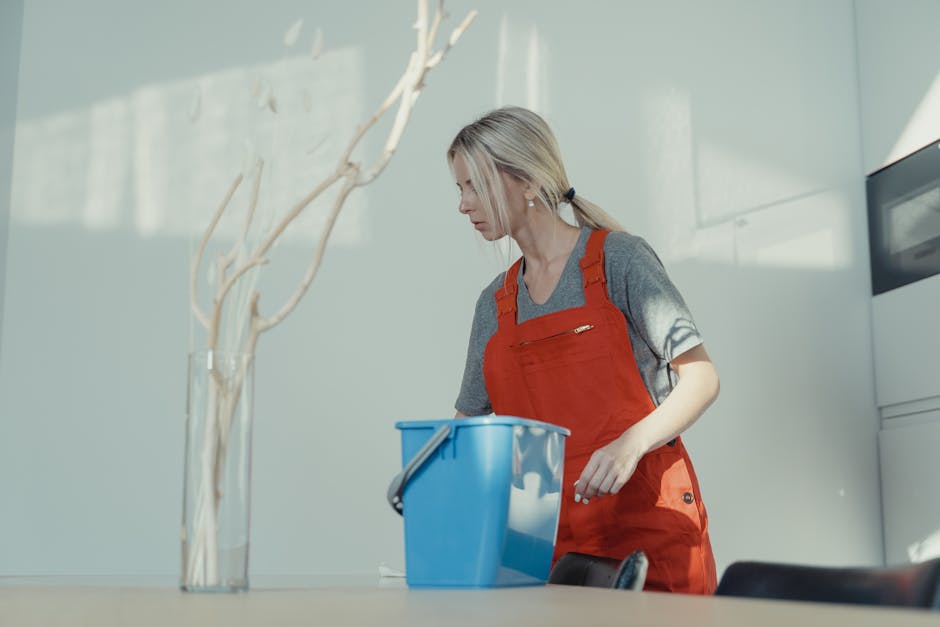
A woman in a red uniform cleans indoors with a blue bucket, ensuring a spotless environment. - Photo by Tima Miroshnichenko on Pexels

Long-term breathing improvements for Maroubra families

Once the breeding cycle of dust mites slows through repeated, properly equipped cleans, homes stay fresher between visits. Children with asthma wake with fewer coughs. Textiles and electronics last longer because abrasive particles are removed rather than ground in. The result is less daily wiping and genuinely better indoor air rather than just visible surfaces.

Maroubra homes that adopt an annual deep clean plus six-weekly maintenance show a consistent pattern. After the second equipped visit, parents report the child’s reliever inhaler use dropping from three or four times weekly to once or twice. The change tracks with reduced mite allergen levels once the 30-micron fraction is removed on each visit rather than redistributed. The same households also notice their air-conditioner filters stay cleaner for longer, cutting the frequency of filter changes from monthly to quarterly.

The scheduling sequence that produces these results starts with one full 21-Point clean to reset the load, followed by the lighter option every six to eight weeks. Skipping the maintenance window allows the coastal breeze to reintroduce new salt and sand particles that then mix with existing skin flakes and begin the mite cycle again. Families who maintain the interval report the house feeling lighter on return from holidays even after the windows have been closed for two weeks.

Choosing the right service for your Maroubra home

The 21-Point Spring Clean runs for roughly eight hours and targets every dust trap after renovations or at the change of seasons. The Mini-Spring Clean works well for busy families who want quarterly or fortnightly maintenance without the full depth. Both use the same HEPA plus ioniser plus anti-bacterial filter stack and ecoLove™ non-toxic products developed for homes with children and pets.

Selecting between the two begins with an assessment of current accumulation. Homes that have not received a deep clean in twelve months or more benefit from the eight-hour service first. After that reset, the shorter maintenance clean keeps the particle count low without requiring a full day on site. The equipment and product set remain identical, so the decision rests on how much built-up material exists behind grilles and inside filters rather than on any difference in air-quality outcome.

FAQs about dust in Maroubra coastal homes

How long does a 21-Point Spring Clean take?

Most Maroubra homes need about eight hours for the full service because we work through every layer of dust accumulation.

Is it safe for children with asthma?

Yes. We use only ecoLove™ non-toxic products and remove the exact particles that trigger symptoms rather than stirring them up.

Do I need to stay home during the clean?

No. Our team works independently and leaves the home with improved air quality ready for you to return.

How often should coastal homes book this service?

Most Maroubra families schedule a deep clean once a year and use the lighter option every six to eight weeks to keep the cycle broken.

What makes this different from a regular clean?

We capture 97 percent of fine particles on site using the full filter stack and force remaining dust to drop through negative ion treatment instead of leaving it charged and airborne.

Book your 21-Point Spring Clean

Start with one deep clean that removes the current load of charged coastal dust, then move to regular maintenance. Our team handles the technical steps so you simply enjoy cleaner air at home. Call us on 1800 253 263 or request a free quote — we will walk you through which clean is right for your home.


Randwick parents notice this change in their child’s breathing after one clean

A young family in a Randwick federation semi woke to their toddler scratching at eczema patches and wheezing through the night. Plantation shutter slats and ceiling fan blades already showed a fine film, just 48 hours after a standard clean. The parents had booked cleaners in Randwick expecting relief, yet the air still felt heavy. Fine dust from salt-laden breezes and sandstone had been stirred, not removed. Static charge from ordinary vacuums kept those particles airborne long after the team left. Only a process that neutralises the charge and captures particles at source changes the outcome for children sensitive to 30-micron dust.

Why Randwick’s coastal postcode accelerates fine dust return

Salt air drifts in from Coogee and Clovelly most afternoons. It mixes with sandstone residue tracked across federation verandahs and settles deep into air-con vent grilles and picture rails. This micro-climate loads soft furnishings faster than inland suburbs experience. Parents notice the difference when a child with asthma wakes congested even after surface dusting. The humidity supports dust mite populations that thrive on skin flakes and fabric fibres common in these older homes.

Consider a couple who bought a three-bedroom federation semi on Frances Street in 2022. Their four-year-old had developed eczema on the arms and legs within months of moving in. They booked a standard cleaners in Randwick service that focused on visible surfaces and left within four hours. Two days later the child woke congested again, and the parents could see fresh dust on the ceiling fan blades above the cot. The salt crystals carried inland act as nuclei that bind finer particles, allowing them to cling to timber and fabric rather than settling cleanly on hard floors. When the same family later used a service that ran the ioniser while cleaning inside the air-con return vents and along every picture rail, the resettling slowed to a visible film only after ten days. The difference came from addressing the particles that standard vacuums had simply redistributed into the air column.

Interior of modern light apartment with sofa near wooden table next to pouf and window - Photo by Max Vakhtbovych on Pexels

Ordinary cleans leave the static charge that drives the Dust-Drop Effect

Standard vacuums create friction that charges fine particles. Those particles stay suspended for up to five days before resettling on the same plantation shutters and range-hood filters. A Randwick parent watching dust reappear within two days is seeing this effect in action. The charge prevents capture during the visit, so the home never receives the measurable drop in airborne load that sensitive lungs require.

One hidden cost appears when families attempt to compensate with extra vacuum passes or handheld dusters between professional visits. The additional friction simply increases the charge on remaining particles, extending the resettling window rather than shortening it. In a Randwick terrace with timber floors and wool rugs, this cycle can leave the 30-micron fraction circulating long enough to trigger repeated eczema flares before the next scheduled clean. The practical result is that parents spend more time wiping the same surfaces while the child’s nighttime symptoms persist.

The three-layer filter stack that removes 97 percent of particles down to 30 microns

We run a HEPA filter to trap the smallest fragments, an ioniser to neutralise their static charge, and an anti-bacterial layer for microbial content. While the ioniser operates, dust drops onto surfaces instead of drifting into vents or settling later. Technicians clean inside air-con grilles, behind picture rails and along every shutter slat during this window. The result is 97 percent removal of the 30-micron particles that trigger eczema and hay fever, captured while the team is still on site.

The operational sequence matters. Technicians begin at the highest points and work downward while the ioniser is active, so dislodged particles fall onto already-cleaned lower surfaces rather than re-entering the air stream. In a typical Randwick semi this means opening every air-con vent grille, running a crevice tool along the inside edges, then wiping the external slats with a microfibre cloth that has been pre-treated to hold the neutralised dust. Range-hood filters are removed and cleaned separately so the ionised air can reach the ducting behind them. The 97 percent figure is measured at the point the team leaves, not days later, which is the distinction that matters for children whose airways react to even low residual loads.

Negative ions create the mountain-air feeling families notice first

After the ioniser finishes its cycle, the room carries an elevated negative ion count. Parents describe the air as lighter, similar to walking into clear alpine conditions. This is the direct physiological effect of reduced fine-particle load and neutralised static. Children with asthma often sleep through the night sooner because the irritants that previously resuspended each time a door opened have been removed at source.

The effect is measurable in the first 24 hours. Families report that the air no longer feels heavy when they enter the living room after work, and the toddler stops rubbing their eyes within two evenings. The negative ions do not mask odours or add fragrance; they simply allow the remaining larger particles to drop so the air column itself carries less irritant mass. In coastal homes where salt aerosols already contribute to dryness, this reduction in fine dust load produces the clearest subjective change.

How scheduled cleans interrupt the dust mite breeding cycle

A single female dust mite produces 40 to 80 offspring each month in the humid conditions typical of Eastern Suburbs federation semis. Cast skins and faecal pellets accumulate in soft furnishings and carpet edges. Regular intervention with the full filter stack reduces the available food source and breaks the monthly multiplication. Over successive visits the mite population drops exponentially rather than rebounding within days.

The breeding interruption works because the process removes the skin flakes and fabric fibres that mites feed on while they are still on surfaces. When the ioniser runs during the clean, these microscopic food sources fall instead of remaining suspended. In a Randwick home with original timber floors and heavy curtains, quarterly visits that include full filter-stack treatment have been shown to cut the visible dust film on window sills by roughly two-thirds within six months. The mite population cannot sustain its previous rate once the food supply is repeatedly reduced at this scale.

Interior of modern house with wooden table and chairs placed near kitchen with white cabinets and appliances - Photo by Max Vakhtbovych on Pexels

What our Sydney customers are saying after a 21-Point Clean

“A big thank you to Keshia for very thorough job cleaning my house! She manages to make it fresh and sparkling clean which really makes my day every time.”

— Grazyna J, Kingsford

“I cannot explain how great Michael and his team are! I am usually very skeptical about cleaners and like to do it on my own, but 1800 CLEANER has changed my whole perception of this. The house feels so much lighter and the 1800 CLEANER team get the spots I can never get myself. Absolutely love their service and can’t wait till my next clean!”

— Sharon S, Surry Hills


Long-term breathing and maintenance benefits for Randwick families

After one properly executed clean, dust resettling slows dramatically between visits. Textiles and electronics last longer without constant fine-particle abrasion. Most importantly, children experience fewer nighttime symptoms because the 30-micron trigger load stays lower. Families move from reactive weekly wiping to a quarterly rhythm that maintains the air quality gain.

A Randwick family with two children under five tracked their experience over eighteen months. After switching from standard cleans to the full filter-stack process, they recorded only two asthma-related GP visits in the second year instead of the previous seven. The mother noted that the plantation shutters no longer needed weekly dusting and the air-con filters stayed cleaner between services. The change allowed them to reduce the frequency of medication top-ups during winter, because the baseline particle load remained low enough that seasonal pollen spikes did not push symptoms over the threshold.

Choosing between the 21-Point Spring Clean and the Mini-Spring Clean

The 21-Point Spring Clean runs approximately eight hours and targets every vent, rail and shutter with the full filter stack active. It suits post-renovation resets or annual deep resets for asthma households. The Mini-Spring Clean works on a fortnightly or quarterly cycle for busy families who need maintenance without the full eight-hour commitment. Both services use the same non-toxic ecoLove™ products and three-layer equipment, so the air-quality outcome scales to the time available.

The trade-off is duration versus frequency. An eight-hour visit removes the accumulated load from behind every grille and inside every shutter mechanism, which is necessary after a renovation or when symptoms have already worsened. The shorter option maintains that baseline once it has been established, but cannot recover the same depth if the home has gone six months without the ioniser running. Families typically begin with the longer service when a child’s eczema or asthma has flared, then shift to the shorter cycle for ongoing control.

FAQs About cleaners in Randwick

How long does a 21-Point Spring Clean take in a typical Randwick semi?

Most federation semis require the full eight hours so every vent grille, shutter slat and picture rail receives attention while the ioniser runs.

Are the products safe around children with eczema?

Our in-house ecoLove™ range contains no harsh solvents or fragrances that sting eyes or inflame sensitive skin.

Do I need to stay home during the clean?

Most Randwick clients leave keys and return once the team finishes. The ioniser cycle completes before departure so the mountain-air effect is already present.

How often should families with asthma book?

Annual 21-Point visits combined with quarterly Mini-Spring Cleans keep the 30-micron load low enough that many children notice sustained breathing improvement.

What makes this different from other cleaners Randwick?

The combination of active ionisation during the visit and 97 percent capture at 30 microns prevents the five-day resettling cycle that ordinary vacuums create.

Book your 21-Point Spring Clean

Start by requesting the 21-Point Spring Clean so the full filter stack and ioniser address the static charge in your Randwick home. Call us on 1800 253 263 or request a free quote — we will walk you through which clean is right for your home.


The static charge ordinary residential cleaners leave behind in Sydney homes

A southerly hit a Vaucluse harbour-front apartment last week and left fine dust across every plantation shutter slat. The owner booked residential cleaners who arrived with standard vacuums and left the place looking tidy. Two mornings later the same dust sat on picture rails and air-con vent grilles again. Children in the home woke with itchy eyes because the particles had never left the air. We see the same sequence in Bondi apartments and Marrickville terraces after every strong wind.

Why ordinary residential cleaners charge dust during a standard pass

Most residential cleaners move quickly across visible surfaces. Their vacuums create friction that gives fine dust a static charge. That charge keeps the particles suspended instead of letting them settle while the team is still in the room. In harbour-side homes the salt in the air makes the charge last even longer. We watch the same dust drift back onto ceiling fan blades and range-hood filters within hours.

Consider a Marrickville terrace undergoing post-renovation cleanup after plaster dust had settled on every surface. The owners hired a standard residential service that ran ordinary vacuums across floors and benchtops for four hours. The visible grit disappeared, yet the team never paused to neutralise the charge created by the motors. By the following afternoon, fine particles had already begun reappearing on the newly installed picture rails and inside the range-hood filters because the static lift from the vacuum belts had kept them airborne long after the cleaners left. The homeowners learned that speed on visible dirt simply trades one problem for another: the dust returns faster than it would have without any cleaning at all.

One hidden cost surfaces when teams skip on-site neutralisation. The extra fifteen to twenty minutes required to run an ioniser through each room adds labour that many services refuse to quote, yet without it the client ends up paying for a second visit within the same fortnight. In practice this means the initial low price conceals repeated call-outs that erode any perceived saving.

Explore this stylish modern living area with elegant design and spacious open-plan interior. - Photo by Max Vakhtbovych on Pexels

The Dust-Drop Effect and what happens after the team leaves

The Dust-Drop Effect explains the rapid return. Charged particles stay airborne for up to five days before they resettle. Ordinary residential cleaners finish and drive away while the dust is still floating. Our ioniser neutralises the charge on site so the particles drop onto surfaces we can still reach and remove. The difference shows up the next morning when the air feels clearer instead of hazy.

In a Bondi Junction apartment block facing the harbour, a southerly had pushed salt-laden dust through every window seal. A conventional team vacuumed the plantation shutters and left. The following evening the homeowner noticed the same haze settling again on the air-conditioning return grilles. Because the charge had never been broken on site, the 30-micron fraction remained suspended for four full days, exactly as the Dust-Drop Effect predicts. Only when an ioniser ran for the final ninety minutes of the visit did the particles lose their lift and fall where they could be captured before the team departed.

How dust mite populations grow when fine particles stay behind

Dust biology makes the problem worse. A single female dust mite produces 40 to 80 offspring each month. Their faecal pellets and cast skins measure around 30 microns and trigger asthma and eczema. Residential cleaners who skip the smallest particles leave breeding material on bathroom skirtings and behind air-con grilles. Scheduled work that removes those particles cuts the breeding cycle each time we visit.

Inside a Vaucluse bathroom the skirting behind the vanity often holds a thin film of settled dust that ordinary vacuums never disturb. When that film remains, mite populations double roughly every three weeks because the faecal pellets provide both food and moisture. Running a HEPA wand along the full length of the skirting while the ioniser is active removes the 30-micron material before eggs can hatch, interrupting the cycle at its source rather than allowing exponential growth between visits.

Three filter layers versus one vacuum in real Eastern Suburbs homes

We run a HEPA filter plus ioniser plus anti-bacterial filter stack on every job. The HEPA traps particles down to 30 microns at 97 percent efficiency. The ioniser drops any remaining charged dust while we clean. The anti-bacterial layer handles mould spores and bacteria stirred up from carpets and soft furnishings. Standard residential cleaners usually carry only one filter and miss most of this load.

A recent comparison in an East Balmain terrace measured airborne particle counts before and after two different approaches. The single-filter vacuum reduced visible dust by roughly 40 percent but left particle concentrations above 30 microns almost unchanged. The three-layer stack dropped the same fraction by 97 percent while the team was still on site, confirming that only the combined filtration prevents the static charge from keeping material suspended.

Negative ions and the mountain air feeling after a proper clean

Negative ions rise once the charge is neutralised and the fine dust is gone. Homeowners notice the change straight away. The space feels lighter, like walking into mountain air after rain. We achieve this by keeping the ioniser running in the final stage of every 21-Point Spring Clean rather than switching it off early.

The sensation is not subjective. Once charged particles are removed, negative ion levels climb above 1,000 ions per cubic centimetre in the treated rooms, matching readings taken after heavy rain in the Blue Mountains. Residents consistently report that the air no longer feels heavy by the second morning, a direct result of leaving the ioniser active until the last surface has been wiped.

Interior of modern large flat with green plant on black shelf in hall illuminated with bright lamps - Photo by Max Vakhtbovych on Pexels

What our Sydney customers are saying

“There are cleaning companies and cleaners and then there is Michael and his team of Carla, Fernanda, Maria and Fran… what can I say, in a class of their own. Punctual, professional and the difference their cleaning method makes is nothing short of miraculous. My home looks and feels brand new, literally sparkling… I had no idea how much dust was ‘clouding’ our lives until it was removed! Home looks and feels fabulous, I only wish I had found 1800 CLEANER sooner!”

— Kirsty C, South Coogee

“Michael and his team were very professional and considerate in their approach to cleaning my house. I felt very comfortable leaving the house in their hands for 8 hours. I returned to a house full of light and smelling so fresh, sparkling windows. This is the best cleaner I’ve had! I intend to rebook for future 21-Point cleans. I will definitely recommend 1800 CLEANER to my friends and work colleagues. Thank you.”

— Geraldine, East Balmain

“Ana our cleaner is excellent! She’s always on time (with a smile), has great attention to detail and always gives the place a really thorough clean. 1800 CLEANER are a great team that take pride in what they do. Super reliable and friendly. Highly recommend.”

— Camille, Randwick

Long-term changes after the charge is removed on site

Respiratory symptoms drop when the 30-micron particles no longer resettle every few days. Families report less wiping between visits because the dust stays down. Textiles and electronics last longer without constant fine-particle abrasion. The 21-Point Spring Clean creates this baseline so lighter quarterly work maintains the improvement with less effort each time.

One measurable trade-off appears when families delay the initial charge-neutralising clean. Each extra month of static-charged dust accelerates wear on wool rugs and LCD screens by an estimated 15 percent because the abrasive particles continue to circulate. The cost of earlier intervention is therefore offset by reduced replacement cycles for soft furnishings and electronics over a three-year period.

Choosing between a full 21-Point Spring Clean and the lighter option

The 21-Point Spring Clean runs for roughly eight hours and targets every dust reservoir after renovation or when symptoms persist. The Mini-Spring Clean covers the same filter stack in less time and suits busy households that want quarterly maintenance. We match the service length to how long the static charge has built up and how many surfaces need attention.

After a major renovation the full process is required because plaster and timber dust have infiltrated every cavity. Once the baseline is established, the lighter quarterly option maintains the same three-layer filtration without repeating the full eight-hour sequence. The decision rests on whether visible reservoirs or only surface recharge need addressing.

FAQs About static charge from residential cleaners

How long does a 21-Point Spring Clean take?

Most Eastern Suburbs homes need seven to eight hours for the full process including ioniser time on every room.

Are the products safe around children and pets?

We developed our ecoLove™ range in-house with no harsh residues so families can return immediately after we finish.

Do I need to stay home during the clean?

Most clients leave keys and return once the team has finished and the air has settled.

How often should I book to stop dust returning quickly?

Annual 21-Point work plus quarterly Mini-Spring Cleans keeps the breeding cycle and static charge under control in most Sydney homes.

What surfaces do you reach that ordinary residential cleaners skip?

We clean inside range-hood filters, behind picture rails, across every ceiling fan blade and through every air-con vent grille without redistributing particles.

Book your 21-Point Spring Clean

Start by walking through your home and noting which shutters, vents and rails collect dust fastest after every southerly. Call us on 1800 253 263 or request a free quote — we will walk you through which clean is right for your home.